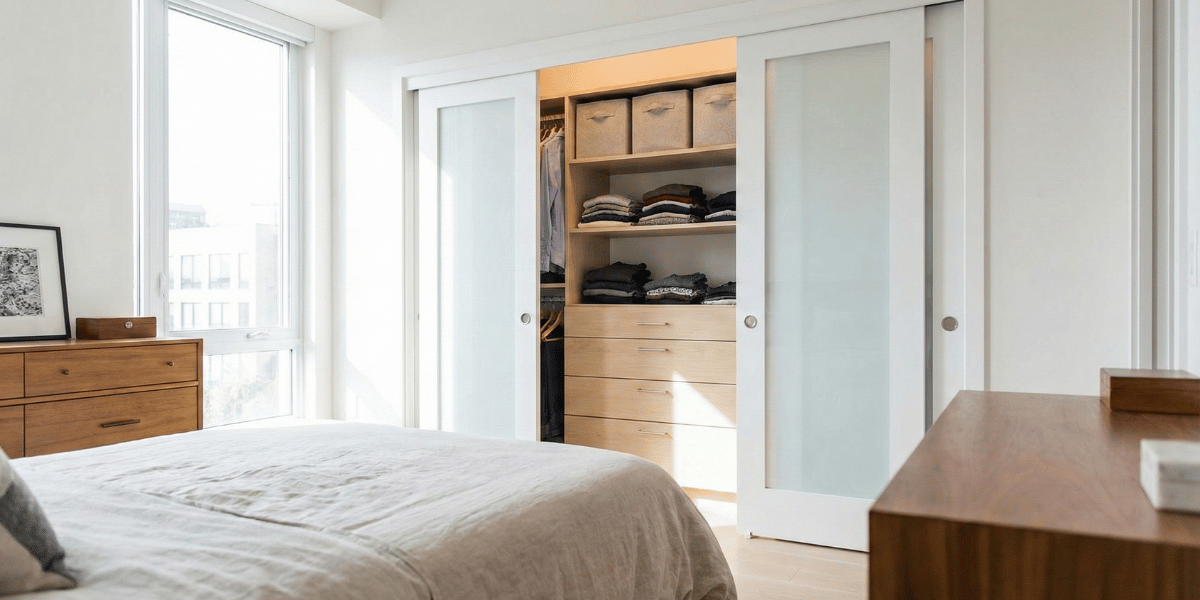
6 min read

Reach-In Closets: Should You Use a Sliding Door or Hinged Doors?

Reach-In Closets: Should You Use a Sliding Door or Hinged Doors?

Choosing the right door style for a reach-in closet can make a bigger difference than most homeowners expect. The door you choose affects how easily you access your closet, how much usable space you have around it, how the room looks, and even how much maintenance you may deal with over time.

If you are deciding between sliding closet doors and hinged closet doors, it helps to look beyond appearance alone. In this guide, we break down how each option performs in real life so you can make the best decision for your space, style, and budget.

Are you wondering which door option makes the most sense for your reach-in closet?

Maybe you are trying to decide whether sliding doors or hinged doors will work better in your bedroom, hallway, or guest room. Both options can work well, but the right choice depends on how much space you have, how often you use the closet, and what kind of access you want day to day.

The SpaceManager Closets team has been designing, manufacturing, and installing custom closet systems in the greater Houston area for more than 27 years. While we do not use sliding doors in our designs, we have worked with enough reach-in closet layouts to know when sliding doors may be the better fit and when hinged doors will give you a better long-term experience.

In this article, you will get a detailed comparison of sliding and hinged closet doors, including functionality, cost, maintenance, style, and best use cases, so you can confidently choose the right option for your home.

What are sliding and hinged closet doors?

This decision usually comes up when you are working with a reach-in closet. These closets are typically shallower storage spaces found in bedrooms, hallways, guest rooms, and entryways. Because they do not offer walk-in access, the door style you choose can have a major impact on how functional the closet feels every day.

Before comparing the pros and cons, it helps to understand how each door type works and what that means for daily use.
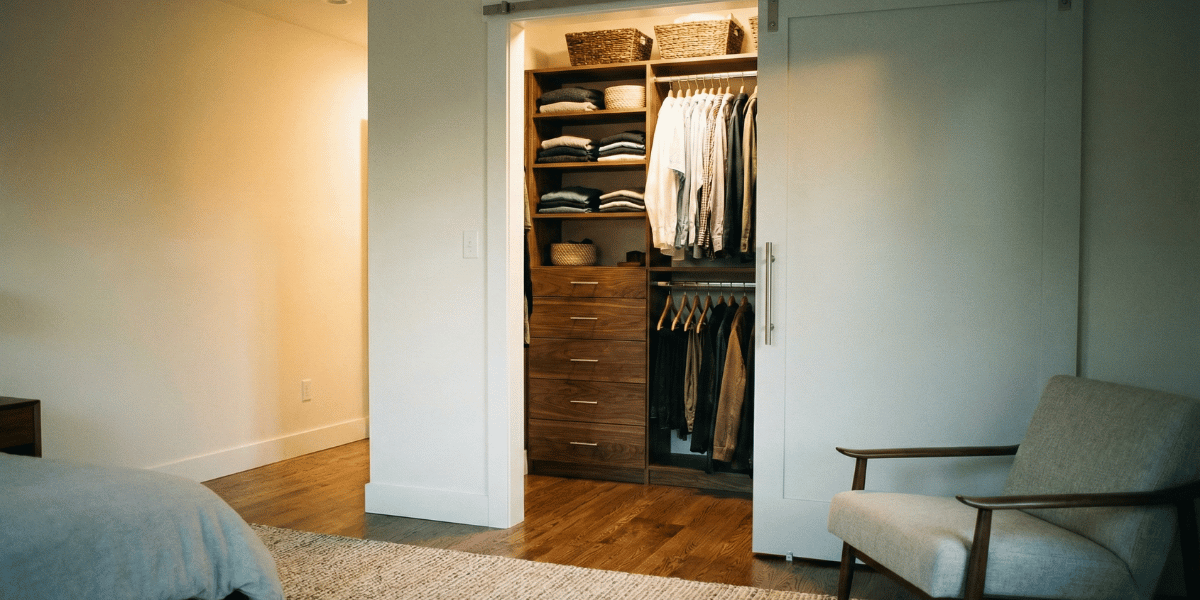
Sliding closet doors

Reach-In Closets - Gallery 4

Sliding closet doors move side to side along a track, with one door panel overlapping the other as they open and close. They are often used in smaller rooms because they do not swing out into the space. Sliding doors can create a clean, modern look, but they also limit how much of the closet you can access at one time.
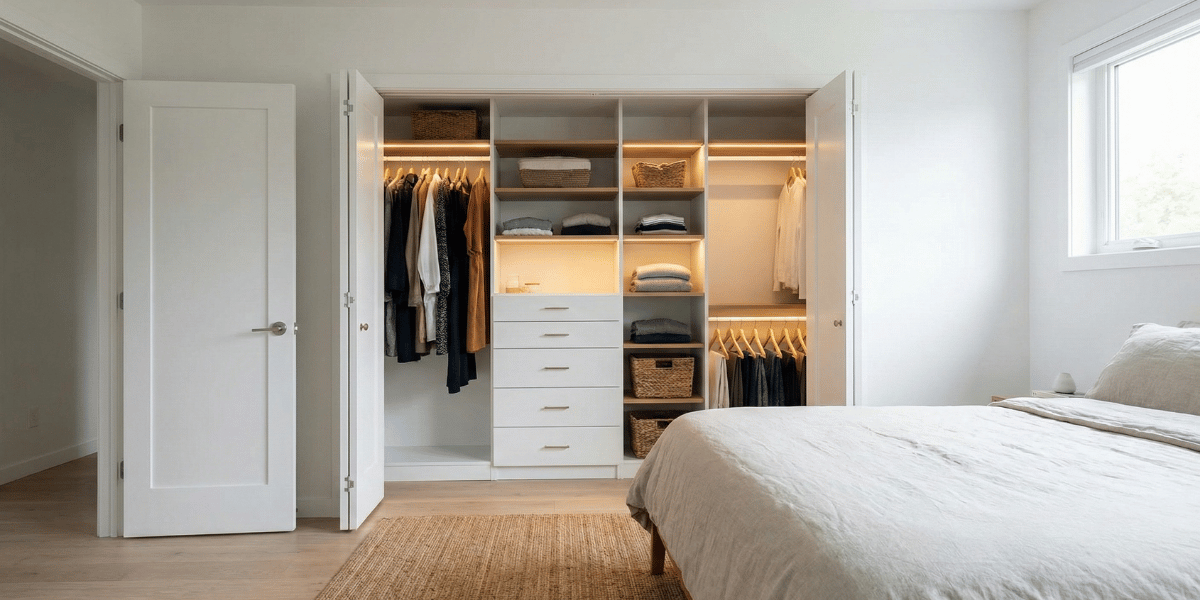
Hinged closet doors

Reach-In Closets - Hero Banner Image

Hinged closet doors swing outward on hinges like a standard interior door. They may be installed as a single door or as double doors, depending on the closet width. Their biggest advantage is full access to the entire opening, as long as you have enough clearance in front of the closet for the doors to open fully.

Have you considered a custom reach-in closet design?

Many homeowners assume that reach-in closets are too small to benefit from a custom closet system, so they settle for basic shelving or a DIY setup that never quite works the way they hoped.

The truth is, a custom design can make a dramatic difference in a small space. Better layout planning, dedicated storage zones, and a more efficient use of vertical space can turn an average reach-in closet into one that feels far more functional.

Read our article What If I Don’t Have Enough Space for a Custom Closet? to learn more about custom small-space and reach-in closet solutions.

Sliding doors vs. hinged doors, side-by-side comparison

Accessibility and functionality

  • Sliding doors: Only one side of the closet is accessible at a time because one panel always covers part of the opening. If you need items from both sides, you will need to slide the doors back and forth.
  • Hinged doors: Give you full access to the entire closet opening when both doors are open. This makes it easier to see everything at once, organize your belongings, and reach items without obstruction.

Best takeaway: If easy access is your top priority, hinged doors usually win.

Room clearance and layout

  • Sliding doors: A strong option for narrow rooms, tight bedrooms, or hallways where you do not have enough clearance for doors to swing open.
  • Hinged doors: Need room in front of the closet to open fully, which can be an issue if furniture sits nearby or if the room is already tight.

Best takeaway: If floor space is limited, sliding doors often make more sense.

Aesthetic and design flexibility

  • Sliding doors: Often feel sleek and contemporary. They are available in mirrored, glass, and wood-look finishes, and they can work well in more modern or minimalist rooms.
  • Hinged doors: Offer a more traditional and versatile look. They can be painted, trimmed, or updated with decorative hardware to match nearly any home style.

Best takeaway: Sliding doors lean modern, while hinged doors tend to offer more classic style flexibility.

Space efficiency

  • Sliding doors: Do not extend into the room, so they do not interfere with furniture, walkways, or nearby nightstands and dressers.
  • Hinged doors: Need open space in front of the closet, which can affect furniture placement and daily movement in smaller rooms.

Durability and maintenance

  • Sliding doors: Tracks can collect dust, hair, and debris over time, which may cause sticking or rough movement. Rollers can also wear down and occasionally need adjustment or replacement.
  • Hinged doors: Hinges may squeak, loosen, or need occasional realignment, but repairs are usually simple and inexpensive.

Best takeaway: Hinged doors are generally easier to maintain. Sliding doors may need more routine attention.

Long-term reliability

  • Sliding doors: Can last for many years when properly installed and maintained, but the track system adds another mechanical component that can wear over time.
  • Hinged doors: Tend to be straightforward and dependable. With quality hinges and solid construction, they often hold up very well over the long term.

What’s the difference in price?

While layout and function should guide the final decision, cost is often one of the biggest factors for homeowners comparing sliding and hinged closet doors.

Upfront costs

  • Sliding doors: Often cost more because they require tracks, rollers, and larger panels. Premium finishes, mirrored inserts, or custom options can raise the price further.
  • Hinged doors: Typically cost less up front, especially when using standard door sizes and hardware. Custom styles and upgraded finishes can still increase the total, but the starting point is often lower.

Installation costs

  • Sliding doors: Usually benefit from professional installation, especially if the panels are large, mirrored, or heavy. Proper installation matters because even a small alignment issue can affect how the doors operate.
  • Hinged doors: Are generally more DIY-friendly and easier to install, which can help reduce labor costs if you are comfortable handling the project yourself.

Long-term maintenance costs

  • Sliding doors: May eventually require roller replacement, track cleaning, or small adjustments to keep them moving smoothly.
  • Hinged doors: Usually only need occasional hinge tightening, lubrication, or minor alignment corrections.

Bottom line: Hinged doors are often the more budget-friendly choice, both initially and over time.

Pros and cons of sliding closet doors

Pros

  • Save floor space in smaller rooms
  • Create a sleek, modern appearance
  • Work well with mirrored or glass panels
  • Do not swing into walkways or furniture

Cons

  • Only part of the closet is accessible at one time
  • Tracks can collect dust and debris
  • Rollers may need replacement over time
  • Can be trickier to install correctly

Pros and cons of hinged closet doors

Pros

  • Provide full access to the entire closet opening
  • Offer a classic, timeless look
  • Are easy to customize with paint, trim, or hardware
  • Are generally simpler to install and repair

Cons

  • Need room to swing open
  • Can interfere with nearby furniture or traffic flow
  • Hinges may squeak or loosen over time
  • Are not always ideal in very tight rooms

Which one is best for your space?

The best closet door depends on how your room functions day to day. Here are a few of the biggest decision factors to think through:

Room size

  • If your room is tight or furniture sits close to the closet, sliding doors may be the better fit.
  • If you have enough clearance in front of the closet, hinged doors can give you easier access and a more traditional look.

How you use the closet

  • If you use the closet daily and want to see everything at once, hinged doors are often more convenient.
  • If you only need quick access to one side at a time, sliding doors may still work well.

Style preferences

  • If you prefer a modern, streamlined look, sliding doors may be more appealing.
  • If you want something more classic and flexible, hinged doors usually offer more design versatility.

Budget

  • If affordability is a top concern, hinged doors are often the simpler and more cost-effective route.
  • If you are willing to invest more for a specific style or finish, sliding doors may offer the look you want.

So, which closet door should you choose?

Now you know the biggest differences between sliding and hinged closet doors, from accessibility and layout to cost and maintenance.

If your top priority is saving space in a tight room, sliding doors may be the smarter choice. If your top priority is getting full access to your closet and keeping maintenance simple, hinged doors are usually the better option.

At SpaceManager Closets, we do more than install closet systems. We help homeowners make smart choices based on how they actually live, how they use their space, and what will serve them best long term. Every closet should work harder for your home, not create more frustration.

Your next step is to have a free, no-obligation conversation with a custom closet designer who can help you decide what will work best for your reach-in closet.
Find Out Now

What If I Don’t Like My SpaceManager Closets Custom Design?

4 min read

What If I Don’t Like My SpaceManager Closets Custom Design?

Are you excited to upgrade to a SpaceManager Closets custom closet but worried about what will happen if you do not like the design? It is a fair...

Read More
How Much Input Will I Have in the SpaceManager Closet Design Process?

5 min read

How Much Input Will I Have in the SpaceManager Closet Design Process?

Are you worried a custom closet project will leave you with something that looks nice but does not actually work for your life? A lot of homeowners...

Read More
What to Expect During a Design Consultation With SpaceManager Closets

3 min read

What to Expect During a Design Consultation With SpaceManager Closets

If your closets are overflowing, your garage feels impossible to manage, or your home office has turned into storage, you might be wondering what it...

Read More